Trump Peace Council: A Controversial Initiative That Has Drawn Global Attention
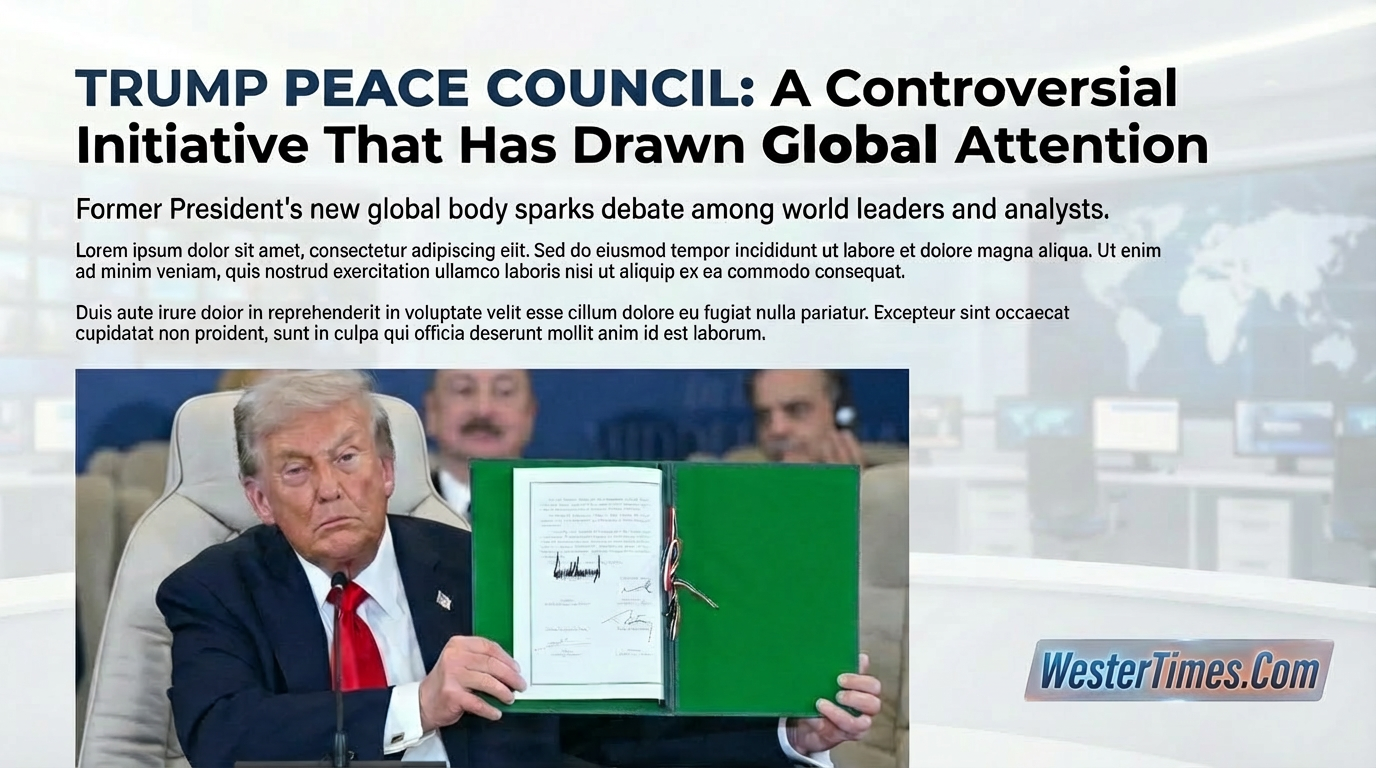
In early 2026, global geopolitics entered a new phase when former US President Donald Trump launched the Peace Council (Board of Peace). Immediately, this announcement attracted international attention. More importantly, Trump positioned this organization as a new diplomatic platform to mediate global conflicts, starting with the prolonged crisis in Gaza and the Middle East, while personally assuming the role of council chairman.
Meanwhile, Trump officially introduced the initiative at the World Economic Forum in Davos. As a result, governments around the world responded in sharply different ways. On one hand, several countries openly expressed their willingness to join. On the other hand, many governments rejected the invitation, while major global powers continued to evaluate their options. Therefore, this article examines global reactions, the motivations behind the council’s creation, and the strategic vision Trump promotes.
Background of the Peace Council’s Formation
First of all, Trump designed the Peace Council as part of his broader strategy to resolve the Gaza conflict and strengthen his international influence. Consequently, the organization aims to:
- Support ceasefire negotiations and stabilize conflict zones;
- Monitor post-conflict reconstruction and governance processes;
- Create an alternative mediation forum outside traditional institutions such as the United Nations;
- Strengthen the role of the United States and its strategic allies in shaping global security outcomes.
Moreover, unlike the United Nations, the Peace Council directly involves member states in decision-making. At the same time, Trump requires permanent members to contribute significant financial resources. As a result, this financial condition quickly became one of the most controversial elements of the initiative.
Countries Accepting and Rejecting Trump’s Invitation
| Countries That Accepted | Countries That Rejected |
|---|---|
| Saudi Arabia | France |
| Turkey | Norway |
| Egypt | Sweden |
| Jordan | United Kingdom † |
| Indonesia | Other Western states remain hesitant or undecided |
| Pakistan | |
| Qatar | |
| United Arab Emirates | |
| Argentina | |
| Hungary | |
| Kazakhstan | |
| Belarus ‡ | |
| Vietnam |
† The United Kingdom refused to join at this stage due to concerns over Russia’s involvement and the council’s legal framework.
‡ Early reports listed Belarus among the countries that accepted the invitation.
Notably, these responses reveal a growing geopolitical divide. Specifically, many Arab states and non-Western allies demonstrated stronger enthusiasm. In contrast, European countries expressed skepticism and caution. Consequently, this pattern highlights concerns about legal authority, institutional overlap with the UN, and long-term diplomatic consequences.
Reasons Behind Trump’s Decision to Create the Peace Council
| Main Reason | Brief Description |
|---|---|
| Criticism of the United Nations | Trump openly criticizes the UN for failing to resolve major conflicts, especially in Gaza. |
| Need for an alternative peace structure | Trump seeks to create a forum that operates faster, more flexibly, and more effectively than traditional mechanisms. |
| Expanding US influence | Trump aims to ensure that the US and its allies continue to lead the global peace agenda. |
| Post-conflict reconstruction | Trump wants to establish a structured framework for rebuilding governance and infrastructure after war. |
| Global participation | Trump plans to involve more than 50 countries through diplomatic outreach and strategic partnerships. |
Furthermore, these motivations reflect Trump’s long-standing political narrative that emphasizes strong leadership, rapid decision-making, and direct international engagement.
Vision and Mission of the Trump Peace Council
| Vision | Core Mission |
|---|---|
| Build a fast, effective, and influential diplomatic institution. | Support ceasefires and stabilize conflict-affected regions. |
| Provide a viable alternative to traditional multilateral systems such as the UN. | Oversee reconstruction programs and post-war governance. |
| Strengthen the US position as a global mediator. | Facilitate continuous dialogue among nations to promote long-term peace. |
Importantly, this vision illustrates Trump’s ambition to directly shape global diplomacy. At the same time, it positions the United States and allied countries as central actors within the evolving international security structure.
Global Reactions and Controversies
Nevertheless, the Peace Council has not escaped criticism. Instead, many analysts and policymakers continue to raise serious concerns.
1. US Dominance
First, critics argue that the council concentrates excessive power in American hands. Consequently, they fear that Washington could dominate decision-making processes.
2. Relationship with the United Nations
Second, several European countries refuse to participate because they worry that the Peace Council could weaken the UN’s authority. Moreover, they fear institutional competition that could fragment global diplomacy.
3. Financial Requirements
Third, the requirement for permanent members to contribute more than USD 1 billion creates major barriers. Therefore, many developing nations struggle to consider full membership.
4. Russia’s Involvement
Finally, Trump’s invitation to Russian President Vladimir Putin has intensified skepticism. As a result, countries that oppose Moscow’s foreign policy stance express stronger resistance.
Conclusion: A New Momentum or a Major Challenge?
Ultimately, the Trump Peace Council, represents an ambitious diplomatic experiment. On the one hand, countries from the Middle East, Asia, and Eastern Europe have shown early interest. On the other hand, many Western nations remain cautious. Consequently, concerns about legitimacy, financial structure, and institutional overlap with the United Nations continue to dominate the debate.
Therefore, as global geopolitics continues to evolve, this initiative could expand US influence on the international stage. However, at the same time, Trump and his allies must overcome serious challenges especially the task of building trust among countries that remain wary of unilateral power in global diplomacy.