Russia’s Strong Statement: The U.S. Focuses Only on Its Own Welfare
Rising Geopolitical Tensions
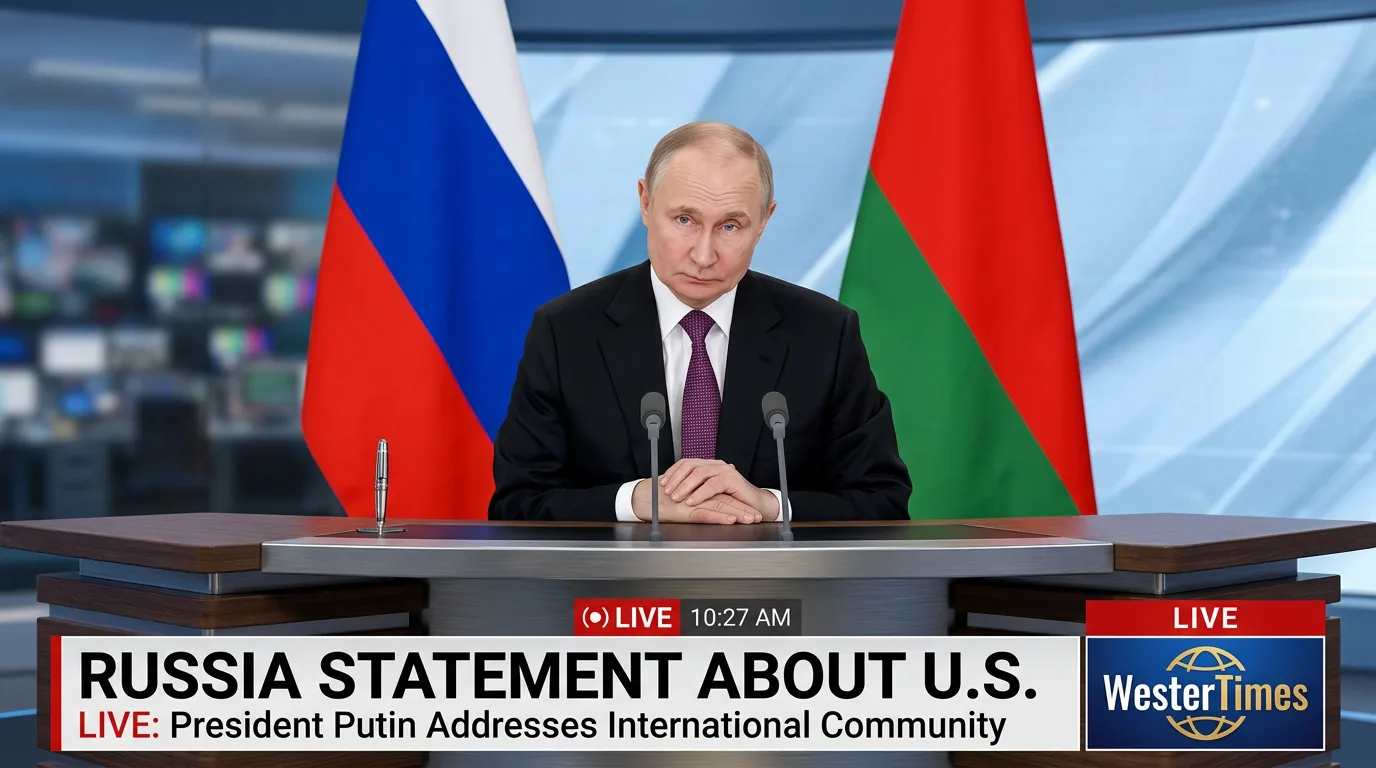
Russia statement about US, has intensified global attention after delivering a sharp statement toward United States. Russian officials openly argue that U.S. foreign policy prioritizes domestic interests and national welfare over global balance. This bold stance has sparked widespread debate among political analysts and international relations experts.
Criticism of U.S. Foreign Policy
As global dynamics evolve, criticism toward the United States continues to grow. Russia now expresses its concerns with stronger and more direct language. According to Russian leaders, the U.S. frequently adopts unilateral policies. These decisions often aim to secure national advantages rather than support long-term global stability.
Moreover, Russia highlights how the United States leverages its influence within international institutions to strengthen its own position. For example, U.S. economic sanctions often target countries that oppose its political agenda. While these strategies deliver strategic benefits for Washington, they also create economic pressure and instability in other regions.
A Debate on National Interests vs Global Responsibility
This situation raises a crucial question: does the United States prioritize only its own welfare? Some analysts defend the U.S. approach by pointing out that every nation naturally protects its own interests. However, critics argue that global leadership requires a broader sense of responsibility.
When U.S. policies affect developing countries, the consequences often extend beyond economics. These nations may struggle with trade disruptions, financial instability, and reduced access to global markets. As a result, critics continue to question whether U.S. strategies truly support global progress.
Russia’s Push for a Multipolar World
Russia actively promotes a multipolar global system. Instead of allowing one dominant power, Russia encourages a structure where multiple countries share influence. This approach aims to create fairness and balance in international relations.
Through its statement, Russia not only criticizes the United States but also calls for systemic change. It urges global leaders to reconsider how power operates in today’s world. By doing so, Russia seeks to reshape international cooperation and reduce dependency on a single superpower.
The U.S. Perspective
The United States maintains its own narrative. American leaders emphasize national security, alliance protection, and the promotion of democratic values. They argue that their policies contribute to global stability and security.
However, other nations often interpret these actions differently. Policies that benefit the United States may create challenges for others. This difference in perception continues to fuel geopolitical tension and diplomatic friction.
Conclusion: A Shifting Global Landscape
Russia’s strong statement highlights a changing global order. Major powers now compete more openly, and each decision attracts global scrutiny. As this competition intensifies, countries must balance national priorities with global responsibilities.
Moving forward, international dialogue will play a critical role. Nations need to engage in constructive discussions and build mutual understanding. Only through cooperation can the world achieve lasting stability and shared prosperity.