
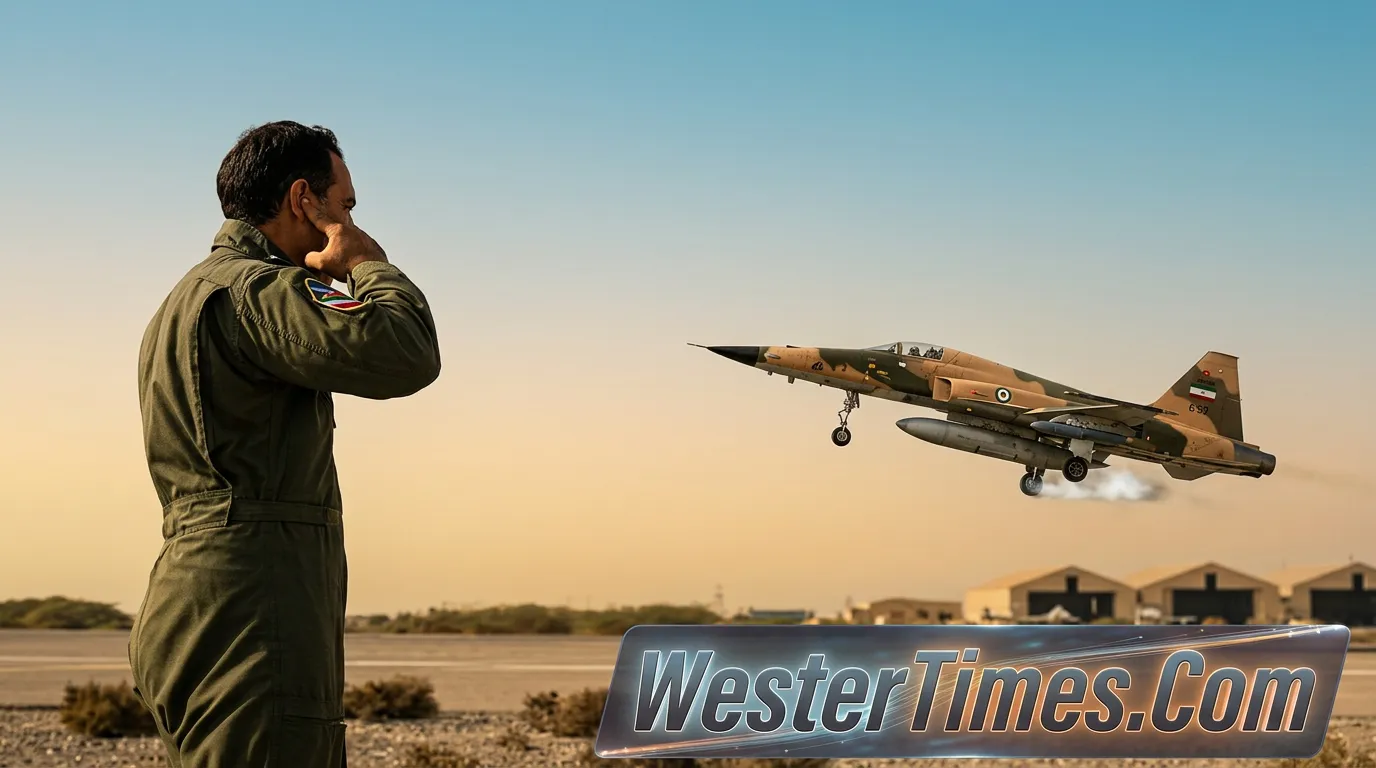
How Did Iran’s F-5 Fighter Jet Penetrate Advanced US Defense Systems in Kuwait?
Iran F-5 fighter jet attack, A surprising development in the Middle East has sparked global attention: how did an aging Iranian F-5 fighter jet manage to bypass one of the most advanced US defense systems in Kuwait? In an era dominated by cutting-edge military technology, this incident challenges common assumptions about modern warfare.
What Happened in Kuwait?
Recent reports indicate that Iran deployed an F-5 fighter jet during a coordinated strike targeting a US military base in Kuwait. The attack reportedly hit critical infrastructure, including radar installations, hangars, and communication facilities. The base relied on layered defense systems, including the highly capable Patriot missile defense system.
Despite this protection, the attack appeared to reach its target. Analysts continue to debate the accuracy and full scope of these reports, but the incident has already raised serious questions about defense vulnerabilities.
Saturation Tactics Overwhelmed Defenses
Iran likely executed a saturation strategy to achieve this breakthrough. Instead of relying on a single strike, it launched multiple threats simultaneously—drones, ballistic missiles, and aircraft—creating intense pressure on the defense system.
This approach forced radar and interception systems to track and respond to numerous incoming targets at once. As a result, defensive systems faced overload conditions. In that moment of strain, the F-5 likely slipped through unnoticed or unchallenged.
Why the F-5 Still Matters
Although the F-5 dates back to the Cold War, it still offers specific tactical advantages. Its smaller size reduces its radar visibility, making detection more difficult under certain conditions. Unlike larger, more advanced jets, the F-5 can operate as a low-profile threat.
Iran has also upgraded parts of its F-5 fleet, improving avionics and operational capabilities. These enhancements allow the aircraft to perform more effectively in modern combat scenarios, even if it cannot compete directly with fifth-generation fighters.
Battlefield Complexity Created Opportunity
Modern warfare creates chaotic and fast-moving environments. During large-scale attacks, multiple objects move at high speeds across the same airspace. This complexity increases the risk of confusion and miscalculation.
Reports suggest that defensive forces struggled to identify all incoming threats clearly. In similar high-pressure situations, even advanced systems can misinterpret targets or prioritize incorrectly. That confusion can open temporary gaps in defense coverage.
Key Lessons from the Incident
This incident highlights a critical reality: advanced technology alone does not guarantee complete protection. Strategy, coordination, and timing play equally important roles in determining success or failure in combat.
Iran likely combined older aircraft with modern tactics to exploit weaknesses in a sophisticated defense network. This approach demonstrates that even legacy systems can deliver impact when used creatively.
Ultimately, the event serves as a reminder that warfare continues to evolve. Military forces must adapt not only by upgrading technology but also by refining strategy and anticipating unconventional threats.