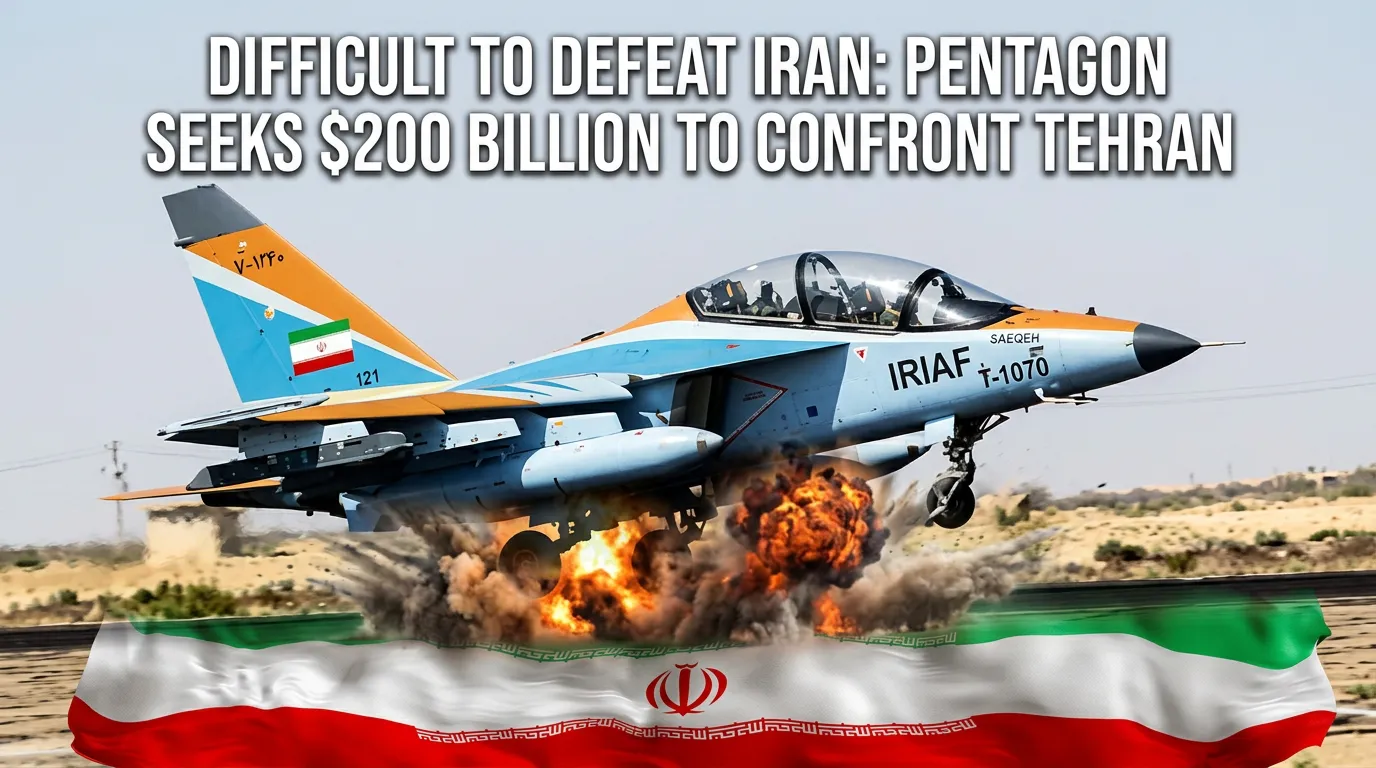
Difficult to Defeat Iran: Pentagon Seeks $200 Billion to Confront Tehran
Rising Costs of War in the Middle East
In one of the most consequential developments of 2026, the U.S. Department of Defense submitted a budget request exceeding $200 billion to the White House to sustain and intensify its military operations against Iran. This extraordinary request marks a pivotal moment in the U.S.–Iran conflict and highlights how costly and complex modern warfare has become. If Congress approves this funding, the United States will expand its military reach significantly against Tehran’s forces. Iran war cost.
The Pentagon’s unprecedented request, translated roughly to Rp 3.3 trillion in Indonesia, reflects the enormous financial burden of prolonged conflict. Initially, Washington framed its campaign as a limited operation, but the evolving battlefield forces the U.S. to spend far more resources than originally expected.
Understanding the Scope of the Conflict
To fully grasp why the Pentagon requests such immense funding, we must examine the scale of the conflict that erupted on February 28, 2026. After years of escalating tensions in the Middle East, the United States and Israel launched coordinated airstrikes on strategic sites across Iran, killing senior leaders and triggering intense military retaliation from Tehran.
Since then, both sides exchanged strikes, missiles, and drone operations. Iran’s military, though smaller in budget and industrial capacity, demonstrated resilience and tactical adaptability. Consequently, U.S. forces encountered stiff resistance, forcing them to request fresh military financing to maintain operations.Iran war cost
Why Iran Remains Hard to Subdue
Many people assume that a technologically advanced military can quickly subdue a determined opponent. Iran’s geography, strategic depth, and integrated air defenses proved this assumption dangerously simplistic. Iranian forces repeatedly succeeded in contested zones, making rapid elimination of their military capability unlikely. These challenges forced the Pentagon to rethink its approach and request substantial resources to maintain pressure and readiness.
Iran’s capacity to strike back with missile barrages and drones forced the U.S. and its allies to expend large quantities of ammunition and interceptors, further increasing the cost of engagement. These dynamics explain why the Pentagon requested additional funding.
Political and Strategic Implications
Beyond logistics and battlefield realities, this funding request carries major political consequences. Congress faces added pressure to approve a war budget while public and political attitudes toward foreign conflicts remain deeply divided. Lawmakers debated limits on presidential war powers, and recent Senate votes highlighted partisan splits over continuing the conflict without clearer objectives.
Strategically, the Pentagon focuses on a broader shift in Washington’s priorities: moving from quick, decisive military strikes to prolonged engagement requiring sustained investment. Military planners continue discussing whether to launch ground operations, expand aerial campaigns, or apply diplomatic pressure. US vs Iran.
Conclusion: A Costly and Prolonged Struggle
The Pentagon’s request for more than $200 billion shows the deep challenges in confronting a nation like Iran. Transitioning from short-term strikes to sustained military efforts, the United States faces financial hurdles and strategic and political questions that could shape global security for years to come.