
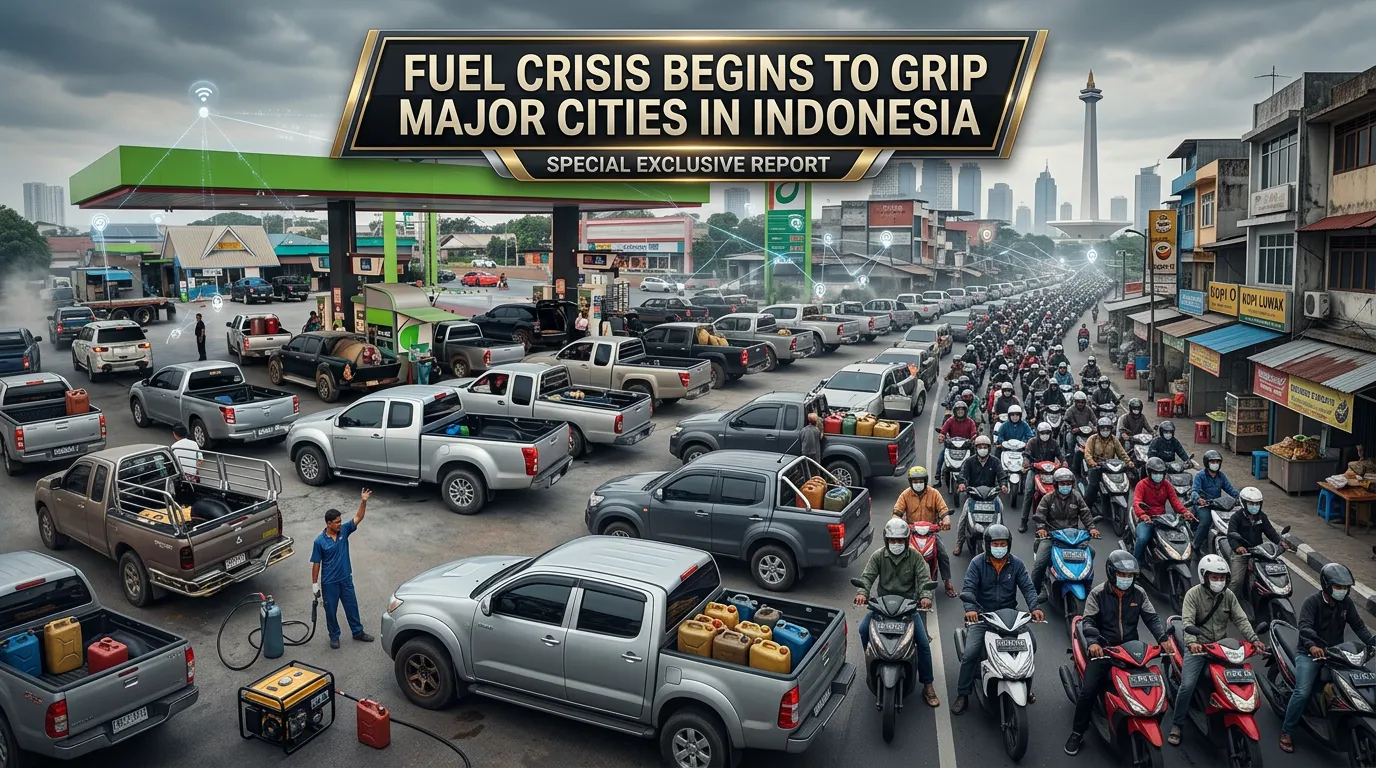
Fuel Crisis Begins to Grip Major Cities in Indonesia
Indonesia is facing a growing challenge as a fuel crisis begins to impact major cities across the country. Long queues at gas stations, rising fuel prices, and limited supply have started to disrupt daily life. This situation not only affects transportation but also threatens economic stability and public confidence. As demand continues to rise, the urgency to address this issue becomes more critical than ever.
Rising Demand Meets Limited Supply
First, the imbalance between fuel demand and supply plays a major role in this crisis. Indonesia, with its rapidly growing population and urban expansion, relies heavily on fuel for transportation and industrial activities. As more people use private vehicles and businesses increase operations, fuel consumption rises significantly. However, supply chains struggle to keep up due to logistical constraints, global oil fluctuations, and refinery limitations.
Moreover, global market pressures have added another layer of complexity. When international crude oil prices increase, Indonesia faces higher import costs. As a result, the government must balance between maintaining subsidies and controlling national spending. This situation creates tension between economic policy and public needs. Indonesia fuel crisis.
Impact on Daily Life and Economy
The fuel crisis directly affects everyday life. Commuters spend more time waiting in long lines at fuel stations, which reduces productivity and increases frustration. Public transportation also experiences disruptions, leading to overcrowding and delays. Consequently, businesses that rely on logistics, such as delivery services and manufacturing, face higher operational costs.
In addition, small and medium enterprises suffer the most. Many of these businesses depend on stable fuel prices to maintain affordable goods and services. When fuel prices rise, they must either increase prices or absorb the cost, both of which impact profitability. This ripple effect eventually reaches consumers, who face higher living expenses.
Government Response and Policy Challenges
To address the crisis, the government has implemented several measures. These include adjusting fuel subsidies, increasing monitoring of distribution, and encouraging energy conservation. However, each policy brings its own challenges. Reducing subsidies may ease the national budget but can trigger public dissatisfaction. On the other hand, maintaining subsidies puts pressure on government finances.
Furthermore, authorities have started promoting alternative energy sources. Electric vehicles, renewable energy, and public transportation improvements are part of long-term solutions. While these initiatives show promise, they require time, infrastructure, and public acceptance to become effective.
The Need for Sustainable Solutions
Looking ahead, Indonesia must adopt sustainable strategies to prevent future fuel crises. Diversifying energy sources stands as a key solution. By investing in renewable energy such as solar and geothermal power, the country can reduce dependence on fossil fuels. At the same time, improving public transportation systems can decrease reliance on private vehicles.
Equally important, public awareness plays a crucial role. Encouraging people to use fuel more efficiently and adopt eco-friendly habits can significantly reduce demand. When combined with strong government policies and innovation, these efforts can create a more resilient energy system. rising fuel prices Indonesia.
Conclusion
The fuel crisis in Indonesia highlights the urgent need for balanced solutions between demand, supply, and sustainability. While short-term measures may ease the current situation, long-term strategies will determine the country’s energy future. By taking proactive steps today, Indonesia can transform this crisis into an opportunity for growth and energy independence.