Stealth Power in the Skies: How U.S. B-2 Bombers Escalate the Conflict With Iran
The Rising Tension Between the U.S. and Iran
The conflict between the United States and Iran has entered a new and dramatic phase. As tensions intensify in the Middle East, Washington has deployed one of its most advanced military assets the US B-2 stealth bomber Iran war. This aircraft represents the pinnacle of modern air warfare, capable of penetrating heavily defended airspace and striking critical targets with precision.
Recent military operations show that the U.S. military is increasing pressure on Iran by launching large-scale airstrikes against strategic facilities. According to U.S. Central Command, bomber forces have already targeted nearly 200 military sites across Iran in just 72 hours, focusing on missile systems, air defense networks, and strategic infrastructure.
Consequently, the deployment of B-2 bombers signals not only tactical escalation but also a powerful geopolitical message.
Why the B-2 Stealth Bomber Matters
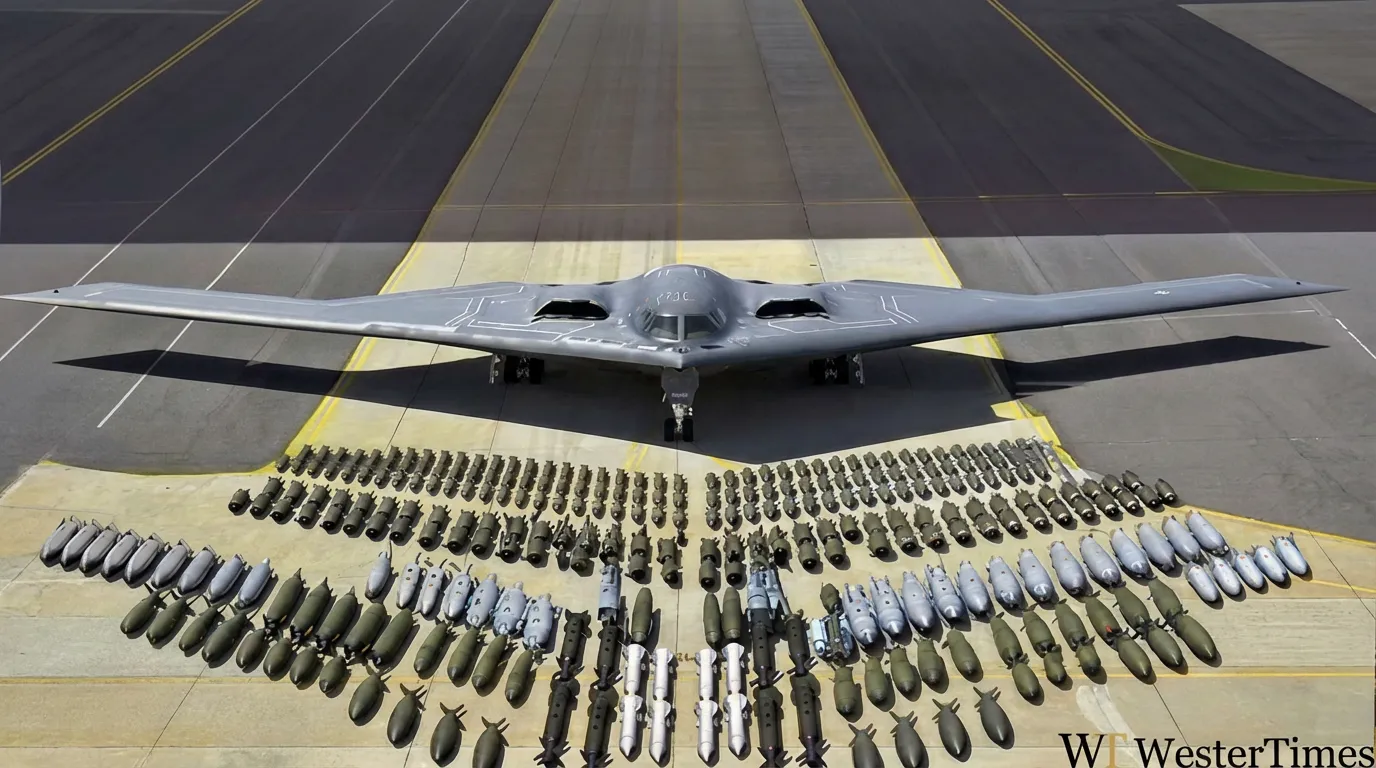
The B-2 Spirit stands among the most sophisticated bombers ever built. Designed with stealth technology, the aircraft can evade radar detection and reach targets deep inside enemy territory. Because of this capability, military planners often rely on the B-2 for missions that require precision strikes against heavily fortified facilities.
Moreover, the bomber can carry powerful bunker-buster weapons capable of destroying underground military installations. These weapons allow the aircraft to attack missile launchers, command centers, and even nuclear-related facilities buried beneath layers of reinforced concrete. B-2 Spirit bomber.
With a range of more than 11,000 kilometers without refueling, the B-2 can launch missions from distant bases and still reach targets across the Middle East. This strategic flexibility enables the United States to conduct long-range operations while minimizing exposure to enemy defenses.
Operation Targeting Iran’s Military Infrastructure
During the current campaign, U.S. forces have coordinated multiple airstrikes using strategic bombers and supporting aircraft. The operation aims to degrade Iran’s missile capabilities and reduce its ability to threaten U.S. allies and regional security.
Reports indicate that B-2 bombers have conducted deep-penetration missions targeting ballistic missile facilities and command-and-control systems. These strikes form part of a broader military operation designed to weaken Iran’s strategic military infrastructure.
As a result, officials claim that Iranian missile launches and drone attacks have declined significantly since the operation began. The sharp reduction highlights how precision air power can rapidly disrupt enemy capabilities on the battlefield.
Regional Impact and Global Concerns
While the United States emphasizes that the strikes target military infrastructure, the broader geopolitical consequences remain uncertain. Iran has warned that further attacks could provoke retaliation across the region, potentially affecting energy routes and global markets.
In addition, the conflict risks widening if other regional actors become involved. Military analysts warn that escalation between Washington and Tehran could destabilize the Middle East and trigger a prolonged confrontation.
Nevertheless, the deployment of B-2 stealth bombers demonstrates the overwhelming technological advantage of U.S. air power. It also underscores how modern warfare increasingly relies on precision strikes, stealth capabilities, and advanced intelligence systems.
Conclusion
The use of US B-2 stealth bomber Iran war, marks a critical moment in the escalating conflict between the United States and Iran. Through precision strikes on strategic targets, the U.S. aims to weaken Iran’s military capabilities and deter further aggression.
However, as tensions continue to rise, the world watches closely. The decisions made in the coming weeks could shape not only the future of the Middle East but also the broader balance of global security. US airstrike on Iran.