
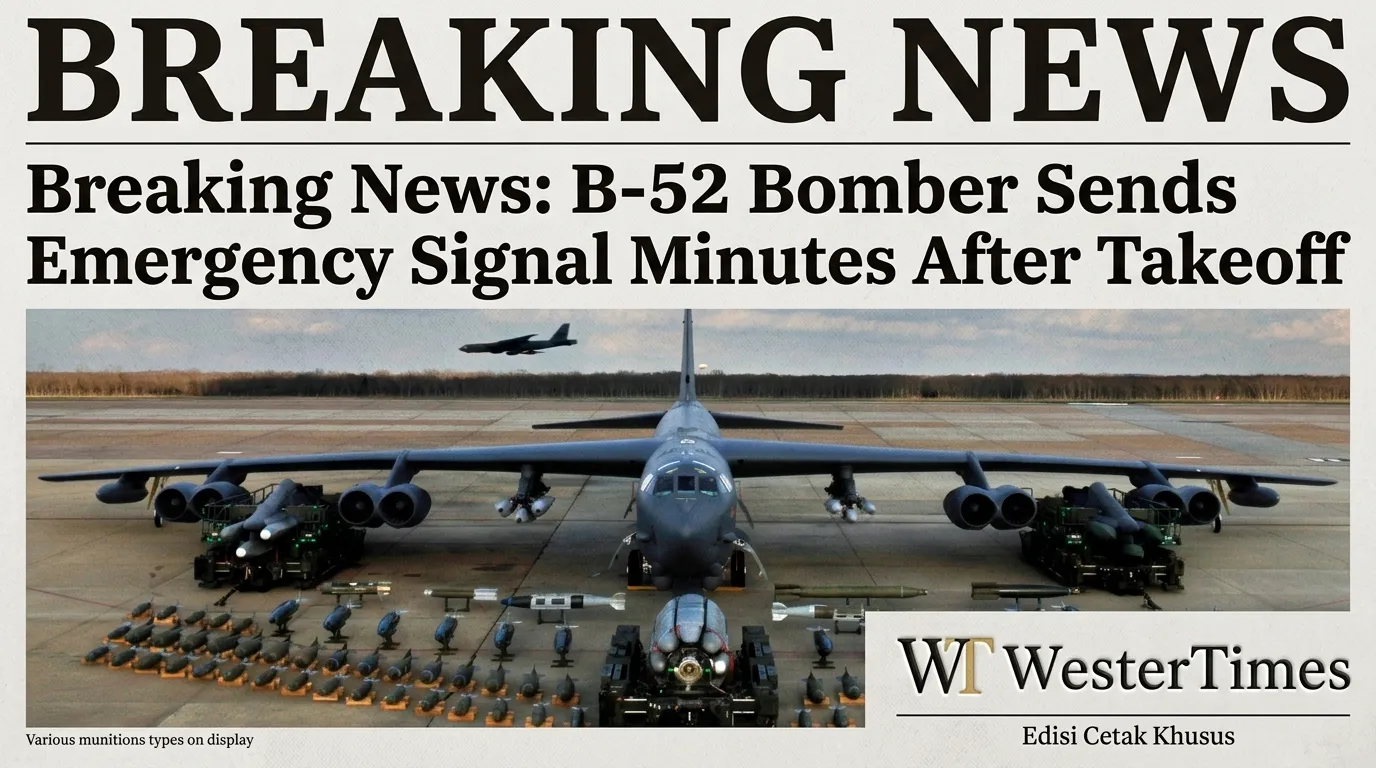
Breaking News: B-52 Bomber Sends Emergency Signal Minutes After Takeoff
US Air Force B-52, Stratofortress, a legendary strategic bomber of the United States Air Force, grabbed global attention after sending an emergency signal just minutes after takeoff. Military experts and aviation enthusiasts immediately focused on this event because B-52 has maintained an impressive track record of reliability over decades.
The incident occurred when the bomber reached its initial cruising altitude on the planned flight path. Suddenly, the aircraft transmitted a 7700 code, the universal emergency code indicating an abnormal situation requiring immediate attention and priority handling from air traffic control. Radar systems and controllers quickly adjusted flight paths to ensure the safety of the aircraft and its crew.
Understanding the B-52 Stratofortress
The B-52 Stratofortress first flew in 1955 and continues to serve as a backbone of the US strategic bomber fleet. It carries conventional and nuclear weapons and completes long-range missions with exceptional endurance. Its continuous operation for over seventy years demonstrates its unmatched capability and reliability in various conditions.
Immediate Response and Safety Actions
The flight crew acted proactively by sending the emergency signal at the earliest signs of a problem. Aviation protocols prioritize caution, and this signal alerts controllers and nearby aircraft to provide a clear path for the bomber. Every second counts in such scenarios, and the crew’s swift actions reduce the risk of accidents.
Air traffic control immediately adjusted other flight schedules to ensure the B-52 could reach a safe landing. Aircraft in the surrounding area received instructions to avoid its path, ensuring no conflicts occurred during the emergency descent.
Possible Causes
Officials continue investigating the exact reason for the emergency signal. Experts suggest several likely causes:
- Technical issues with avionics or engines that may disrupt normal operations.
- Sensor or navigation alerts triggering automatic warnings in the cockpit.
- Human caution, where pilots identify a potential issue and choose to declare an emergency to prevent escalation.
Regardless of the cause, the crew’s decision to act early highlights the importance of proactive safety measures in aviation. The emergency signal provides a crucial safety mechanism that prevents minor issues from escalating into critical incidents.
Impact on Airspace and Operations
The emergency disrupted local air traffic temporarily, requiring immediate coordination among air traffic controllers. Other flights experienced minor delays or route adjustments to provide the B-52 priority. The swift handling ensured that the bomber landed safely without incidents or injuries.
This event also emphasizes that even legendary aircraft like the B-52 face operational challenges. Aviation systems, flight crews, and control centers must remain vigilant at all times to manage unexpected situations. B-52 bomber emergency.
Looking Ahead
Military authorities continue the investigation and aim to release full details soon. Analysts and enthusiasts will closely follow the findings to understand what triggered the emergency and how future flights can operate even more safely.
The incident demonstrates that even the most experienced aircraft and crews must respond quickly to dynamic situations. Safety remains the top priority, and every precaution counts in modern aviation operations.