Mass Shootings in the United States: A Persistent National Crisis
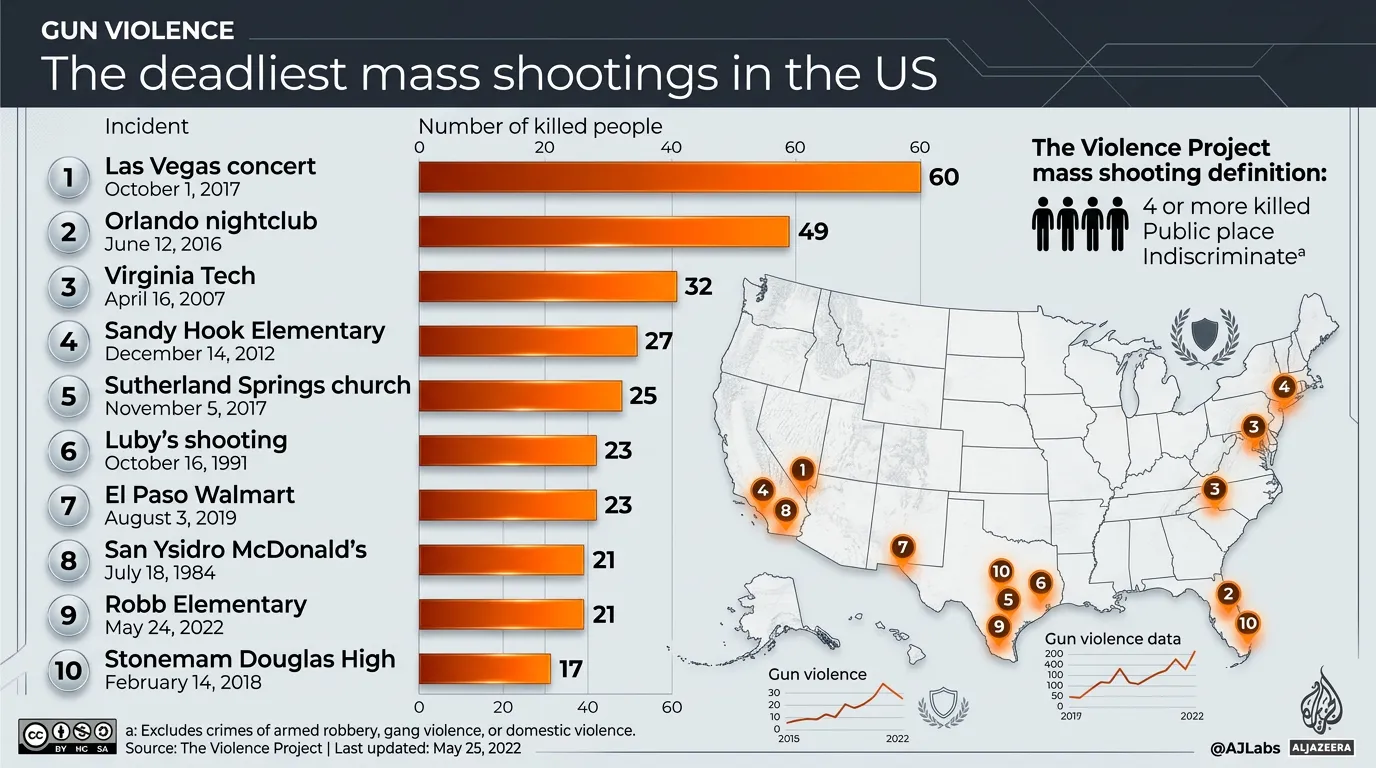
Mass shootings in the United States, continue to draw global attention because these violent incidents strike suddenly and leave lasting devastation. Communities across the country experience fear, loss, and uncertainty as these events repeat in schools, shopping centers, workplaces, and public venues. The issue remains deeply complex and demands urgent discussion and action.
Rising Frequency of Mass Shooting Events
The United States has seen a steady rise in mass shooting incidents over the past decade. Attackers strike in places where people expect safety and normal daily life. Schools, concerts, grocery stores, and places of worship have all become targets. Each new incident reinforces public anxiety and raises concerns about everyday security.
As these events increase, communities begin to question how such violence continues to occur. Many citizens call for stronger prevention strategies, while others debate the balance between personal rights and public safety. This ongoing tension shapes national conversations and political decisions.
Key Factors Behind the Violence
Multiple factors contribute to mass shootings in the United States. No single cause explains every incident, but several patterns appear repeatedly.
First, access to firearms plays a major role. Individuals in many states can obtain guns with relative ease. This accessibility increases the likelihood that conflicts or unstable situations turn deadly.
Second, mental health challenges often influence violent behavior. Some perpetrators show signs of emotional distress, isolation, or untreated psychological conditions. Communities struggle to identify warning signs early enough to prevent tragedy.
Third, social pressures and personal frustrations also contribute. Economic hardship, bullying, rejection, and isolation can push individuals toward destructive actions. In some cases, exposure to violent content online can reinforce harmful thoughts and behavior.
Impact on Society and Communities
Mass shootings deeply affect survivors, families, and entire communities. Victims’ families face emotional trauma, grief, and long-term psychological pain. Survivors often struggle with fear and anxiety long after the event ends.
Communities also experience a decline in trust and safety. People begin to avoid public spaces, schools increase security measures, and workplaces invest in emergency planning. This constant state of alert changes how people live and interact.
The national conversation also grows more divided. Some groups demand stricter gun control laws, while others defend gun ownership rights. This disagreement often slows legislative progress and leaves many communities feeling unprotected.
Prevention Efforts and Possible Solutions
Authorities, organizations, and advocacy groups continue to search for solutions. Many experts support stronger background checks to prevent dangerous individuals from obtaining firearms. Others push for better monitoring systems to identify early warning behaviors.
Mental health support also plays a critical role. Expanding access to counseling services and crisis intervention programs can help individuals manage emotional struggles before they escalate into violence. Schools and workplaces now invest more in mental health awareness and support systems.
In addition, community awareness programs help people recognize warning signs of potential violence. When individuals report concerning behavior early, authorities can respond faster and possibly prevent attacks.
Conclusion
Mass shootings in the United States represent a serious and ongoing challenge that affects millions of lives. The problem requires cooperation between government agencies, communities, and individuals. By improving gun safety measures, expanding mental health support, and strengthening community awareness, society can reduce the risk of future tragedies and move toward a safer future.