
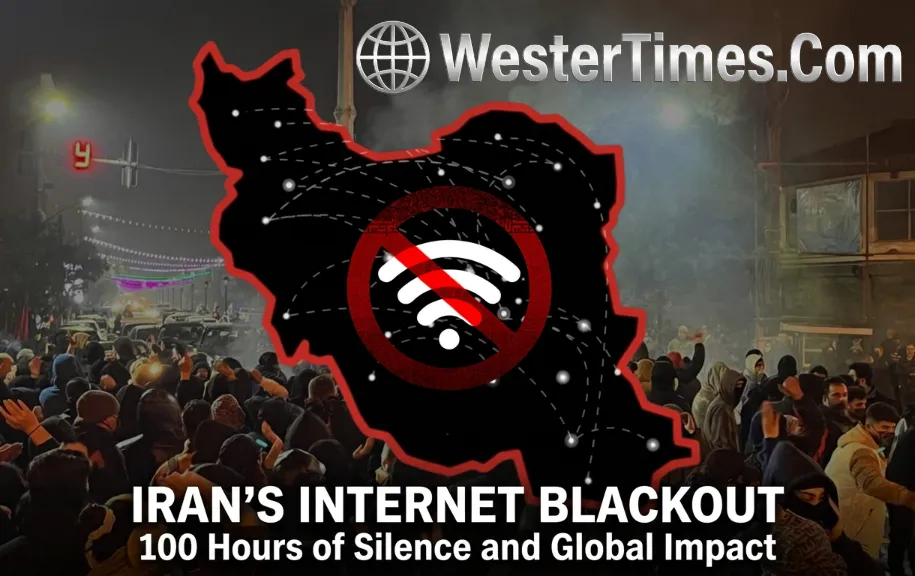
Iran’s Internet Blackout: 100 Hours of Silence and Global Impact
Iran is facing one of the most severe digital disruptions in its recent history. For more than 100 hours, the nation’s connection to the global internet dropped to nearly zero, leaving millions of citizens and businesses isolated from the rest of the world. This prolonged outage did not happen by accident authorities deliberately cut access, sparking concern among human rights groups, media organizations, and international observers. Iran internet blackout.
The Blackout Timeline and Why It Matters
On January 8, 2026, Iranian authorities initiated a near‑total internet shutdown as nationwide protests intensified. By the following day, online access across nearly all regions had disappeared. Within hours, connectivity plunged to approximately 1 % of normal levels, effectively severing public access to global platforms and communications networks.
This blackout persisted, surpassing 100 hours, and crippled daily life. Messaging platforms, social media, banking systems, and business operations ground to a halt. Even basic communication tools like SMS and mobile data faced disruptions as authorities tightened control over all digital channels.
Government Justification and Security Claims
Iranian officials justified the massive shutdown by claiming national security concerns. They linked the blackout to political unrest and regional tensions, arguing that it prevented misinformation and protected critical infrastructure. However, many experts characterize the move as a deliberate tactic to suppress dissent and limit public coordination amid protests.
Security agencies and state telecom providers received orders to enforce the blackout, and the effects were swift. With few exceptions, individual citizens lost access to foreign news, social networks, and essential online tools. Meanwhile, select state‑backed outlets continued to broadcast information over limited channels, giving Tehran full control over narrative and media exposure.
Human and Economic Consequences
The consequences of this extended blackout are profound. Families struggled to contact loved ones abroad, and businesses faced steep losses. With virtually no online access, financial transactions dropped sharply, and e‑commerce activity stalled. Many local companies reported severe operational setbacks, contributing to an economic downturn that analysts say could echo for months.
Journalists and independent media outlets also confronted enormous challenges. Without reliable internet, reporting became slower, riskier, and more dangerous. Some media operate through creative methods, like satellite links and encrypted messaging, but these are limited and often illegal under strict new enforcement laws.
Public Reaction and Resistance Efforts
Despite the blackout, Iranians continue to seek ways to communicate and share information. Many turn to satellite internet devices, VPNs, and alternative tools to bypass controls. Younger populations with technology skills formed informal networks to share access tips and workaround strategies. These efforts highlight the determination of ordinary citizens to maintain connection, even under extreme restrictions.
At the same time, frustration and anger run high. Many people view the blackout not only as an attack on their digital rights but also as a tactic to hide critical events from the global community. With limited access to independent verification and news, distrust toward authorities grows even stronger. Iran without internet.
What Comes Next?
As Iran moves forward, the future of internet access remains uncertain. Authorities may restore limited services in phases, but experts warn that the government could tighten digital censorship or build a permanently isolated “national internet.” Regardless of the direction, the 100‑hour blackout stands as a stark reminder of how quickly connectivity can transform from everyday convenience to strategic control.