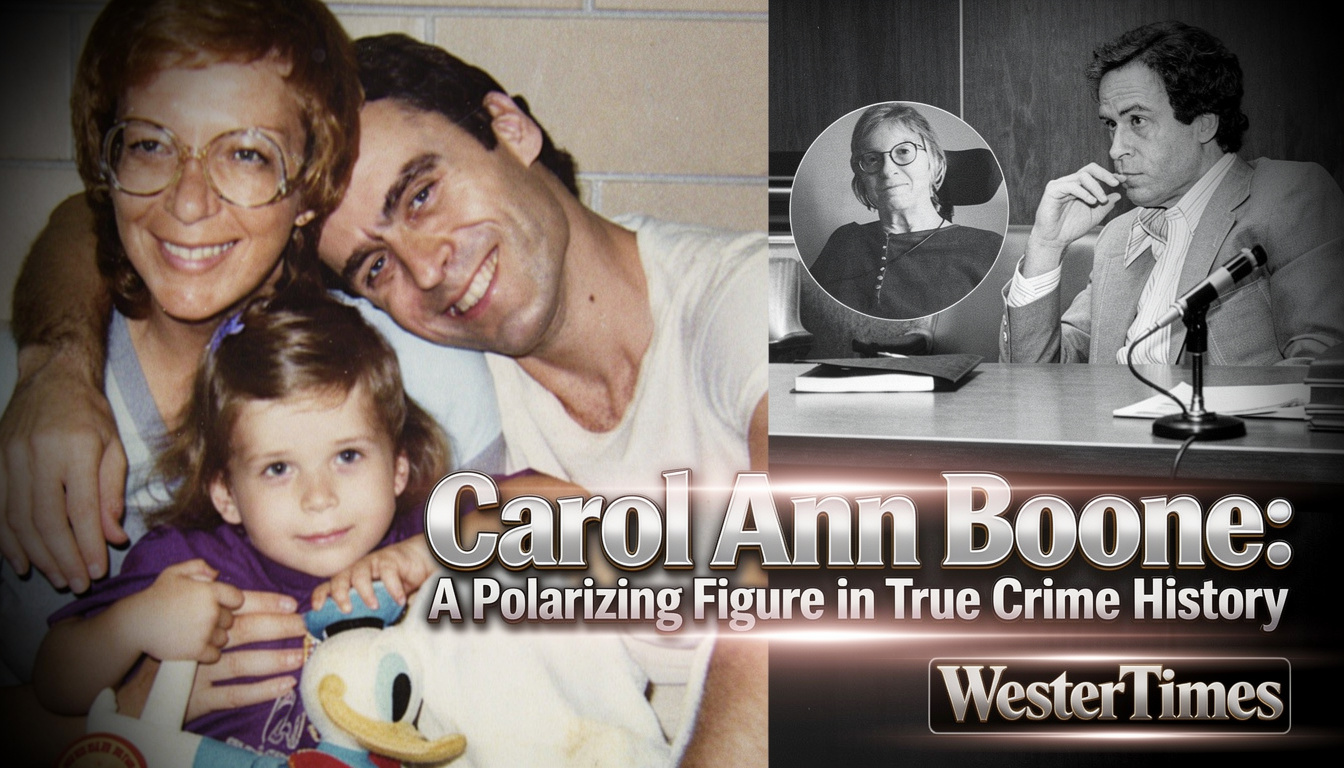
Carol Ann Boone: A Polarizing Figure in True Crime History
Introduction: Beyond the Perpetrator
In the landscape of true crime history, public attention is often fixed on perpetrators. However, figures connected to notorious criminals can be just as compelling. Carol Ann Boone, best known as the wife of serial killer Ted Bundy, remains one of the most polarizing non-criminal figures associated with violent crime. Her unwavering loyalty, controversial decisions, and eventual withdrawal from Bundy’s life continue to spark debate among researchers and true crime audiences.
Early Connection with Ted Bundy
Carol Ann Boone first met Ted Bundy in the 1970s while working at the Washington State Department of Emergency Services. At the time, Bundy appeared intelligent, charming, and socially engaged. Boone, a divorced mother, developed a close personal bond with him, long before his crimes became widely known. This early connection laid the foundation for a relationship that would later shock the public.
Loyalty Amidst Controversy
When Bundy was arrested and charged with multiple murders, many expected Boone to distance herself. Instead, she became one of his most vocal defenders. Throughout the trials, Boone insisted on Bundy’s innocence, claiming that the evidence against him was circumstantial and flawed. Her public support drew intense criticism, with many questioning whether she was manipulated or willfully blind to the truth.
Marriage During Trial: A Shocking Decision
The controversy escalated in 1980 when Boone and Bundy married during his Florida trial. The marriage, conducted in court, was legally binding under state law. This event cemented Boone’s image as a deeply divisive figure in true crime history. To some observers, she represented tragic devotion; to others, she symbolized dangerous denial in the face of overwhelming evidence. Ted Bundy’s wife.
Shifting Perspectives and Withdrawal
Despite her loyalty, Boone’s stance began to shift over time. As Bundy remained on death row and later confessed to numerous murders, Boone eventually cut off contact with him. Reports suggest she sought to protect herself and her daughter from further harm and public scrutiny. This decision added another layer of complexity to her story, raising questions about when belief ends and self-preservation begins.
Psychological Insights and True Crime Analysis
In the broader context of true crime analysis, Carol Ann Boone is often cited in discussions about emotional manipulation, psychological dependence, and the social impact of violent offenders. While she committed no crimes herself, her proximity to Bundy offers insight into how charisma and control can distort perception and loyalty.
Legacy: A Complex Figure
Ultimately, Carol Ann Boone remains a figure who challenges simple moral narratives. Her story forces audiences to confront uncomfortable realities about human attachment, denial, and the far-reaching consequences of violent crime. For this reason, she continues to occupy a significant and controversial place in true crime history. Controversial figures in crime.