U.S.–Iran Negotiations and Trump’s Pressure to Reopen the Strait of Hormuz
Introduction
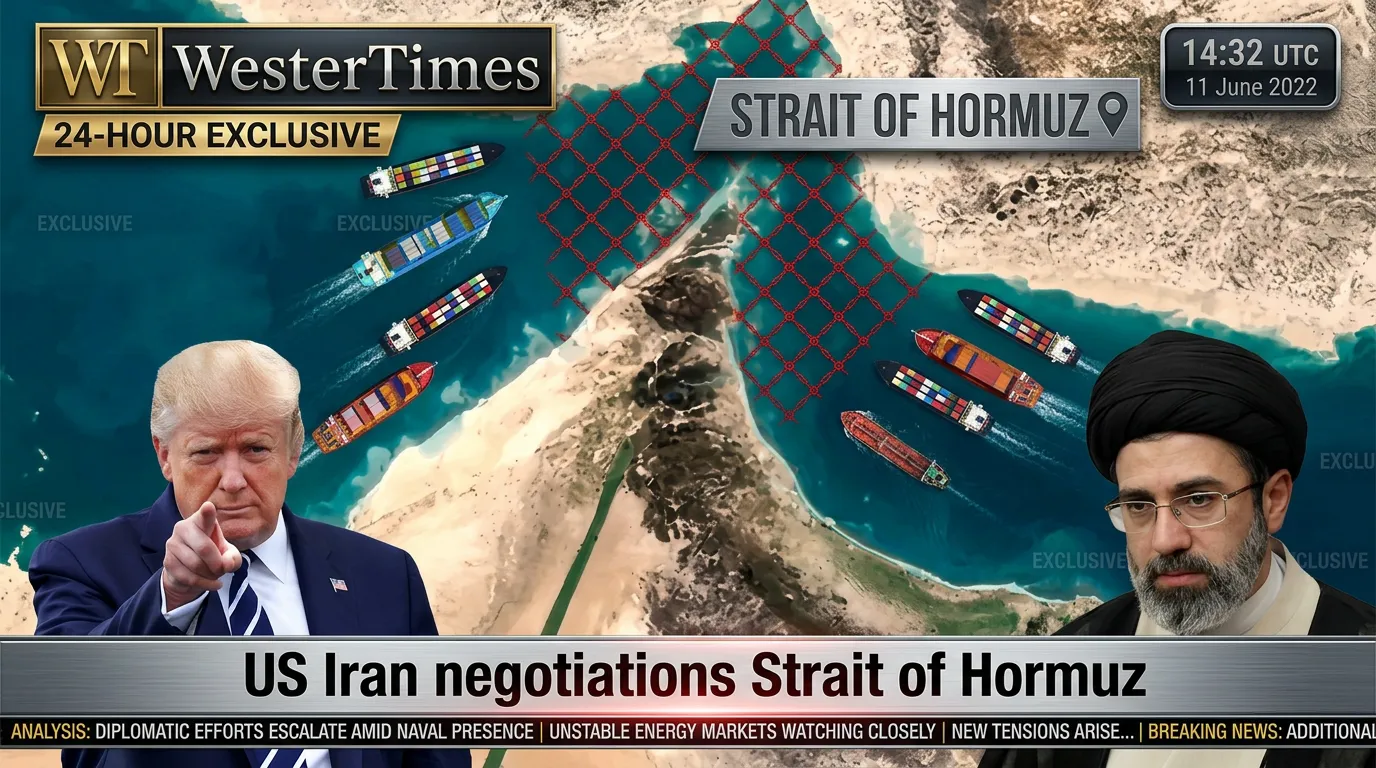
US Iran negotiations Strait of Hormuz, Geopolitical tensions between the United States (US) and Iran have once again drawn global attention. One of the most critical issues in the negotiations between the two countries is the demand to reopen the Strait of Hormuz. US President Donald Trump has emphasized that reopening this strategic waterway is a top priority in any talks with Iran. This situation not only affects bilateral relations but also has a major impact on global energy stability.
The Strait of Hormuz: A Vital Global Energy Route
The Strait of Hormuz is one of the most important shipping lanes in the world because it serves as the main出口 route for oil and gas from the Gulf region. Around one-fifth of the world’s oil supply passes through this narrow passage every day. When this route is disrupted, the effects are immediately felt in global energy prices, inflation rates, and international economic stability.
In recent weeks, reports have indicated that the strait has faced disruptions due to escalating US–Iran tensions. This situation has raised concerns among many countries about a potential wider global energy crisis.
Trump’s Pressure in US–Iran Negotiations
In the latest developments, Donald Trump has openly stressed that reopening the Strait of Hormuz is an essential condition in negotiations with Iran. He described this step as a top priority to ensure global energy trade stability.
Not only that, Trump has also previously issued a strong ultimatum demanding that Iran reopen the route within a limited timeframe, along with threats of military action against energy infrastructure if the demand is not met.
This approach reflects a diplomatic strategy that combines military pressure with political negotiation.
Iran’s Response and Diplomatic Dynamics
On the other hand, Iran insists that its position regarding the Strait of Hormuz cannot be separated from regional security considerations. Tehran views the waterway as a key bargaining tool in negotiations with Washington. Some reports even suggest discussions about monitoring systems and a phased reopening as part of a temporary agreement.
However, tensions remain high as both sides have yet to reach a final agreement. Ongoing diplomatic efforts in various international forums continue to face obstacles, including sanctions issues, security concerns, and conflicting political interests.
Global Impact of the Strait of Hormuz Conflict
Uncertainty in the Strait of Hormuz has broad consequences for the global market. Oil prices tend to fluctuate as investors worry about supply disruptions. In addition, energy-importing countries face increased risks related to higher logistics costs.
If the situation does not stabilize soon, the impact could spread to other sectors such as transportation, manufacturing industries, and global inflation.
Toward a New Negotiation Path
Although tensions remain high, there are signs that both sides are still open to diplomacy. Some reports suggest possible temporary ceasefire arrangements aimed at reopening communication channels. This indicates that a political solution is still possible if both parties are willing to reduce escalation.
Conclusion
US–Iran negotiations regarding the Strait of Hormuz remain one of the most important geopolitical issues today. Donald Trump’s pressure highlights the strategic importance of this waterway for global interests. However, without a stable agreement, the world will continue to face uncertainty in energy markets.