Latest Facts on the US–Iran Conflict: Strait of Hormuz Reopens
A Critical Turning Point in Global Tensions
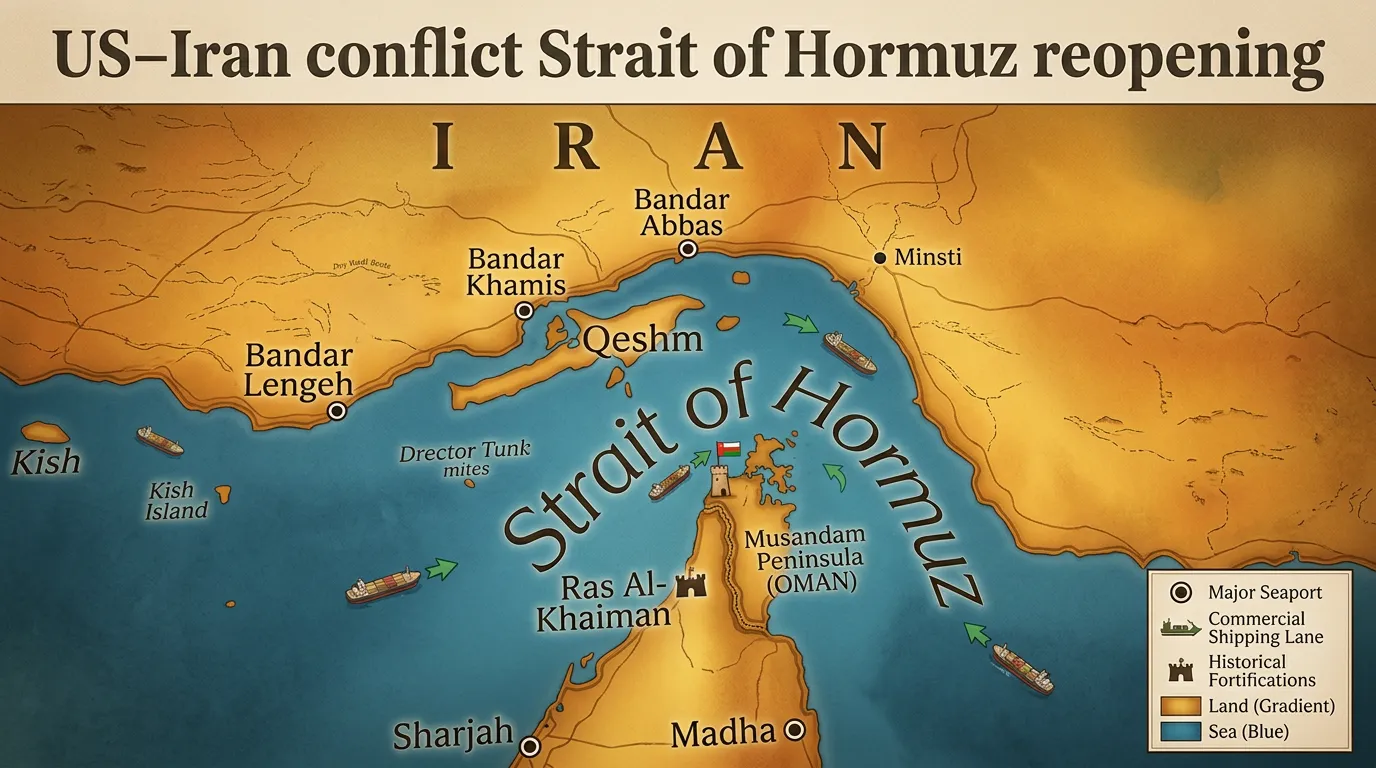
US–Iran conflict Strait of Hormuz reopening, The reopening of the Strait of Hormuz marks a significant shift in the ongoing tensions between the United States and Iran. This strategic waterway, which handles nearly 20% of the world’s oil shipments, plays a vital role in global trade and energy stability. As soon as Iran announced the reopening, global markets reacted instantly, signaling how deeply the world depends on this narrow passage.
Temporary Reopening Signals Strategic Move
Iran reopened the Strait of Hormuz as part of a fragile ceasefire arrangement. Leaders in Tehran framed this move as a controlled and conditional decision rather than a permanent resolution. By allowing commercial vessels to pass, Iran aims to reduce international pressure while maintaining leverage in negotiations. This calculated step reflects a broader diplomatic strategy rather than a full de-escalation.
Tight Control Remains in Place
Despite reopening the route, Iran continues to enforce strict control over maritime traffic. Authorities require ships to follow designated paths and coordinate closely with Iranian forces. This approach allows Iran to secure its territorial influence while sending a clear message: access to the strait depends on compliance. As a result, shipping companies must balance opportunity with caution.
The United States Maintains Pressure
Meanwhile, the United States continues to apply strategic pressure on Iran. Officials have not lifted key restrictions, signaling that Washington seeks stronger commitments before easing its stance. This ongoing tension creates a complex dynamic while ships move through the strait again, political friction remains high. Both sides continue to engage in a careful game of negotiation and signaling.
Global Markets React Immediately
The reopening triggered a swift reaction across global financial markets. Oil prices dropped sharply as supply concerns eased, offering temporary relief to energy-dependent economies. Investors welcomed the development, yet they remain cautious. The situation still carries uncertainty, and any sudden escalation could reverse these gains just as quickly.
Risks and Uncertainty Persist
Although the strait now operates again, risks continue to shadow the region. Iran has warned that it could close the passage if tensions rise or negotiations fail. In addition, threats such as naval incidents or regional instability still pose real concerns. Shipping companies and insurers continue to monitor the situation closely before committing fully to normal operations. US–Iran conflict Strait of Hormuz reopening.
Conflicting Narratives Add Complexity
Both nations continue to present different versions of the situation. US officials suggest that Iran has shown willingness to keep the strait open, while Iranian leaders reject such claims and emphasize their conditional approach. These conflicting narratives highlight the absence of a clear, unified agreement. As long as both sides push different messages, uncertainty will persist.
What This Means for the Future
The reopening of the Strait of Hormuz offers a moment of relief, but not a lasting solution. It reduces immediate pressure on global supply chains and energy markets, yet it does not resolve the underlying conflict. Moving forward, stability will depend on sustained diplomatic efforts and mutual concessions. Until then, the strait will remain one of the world’s most sensitive geopolitical flashpoints—where every decision can ripple across the global economy.