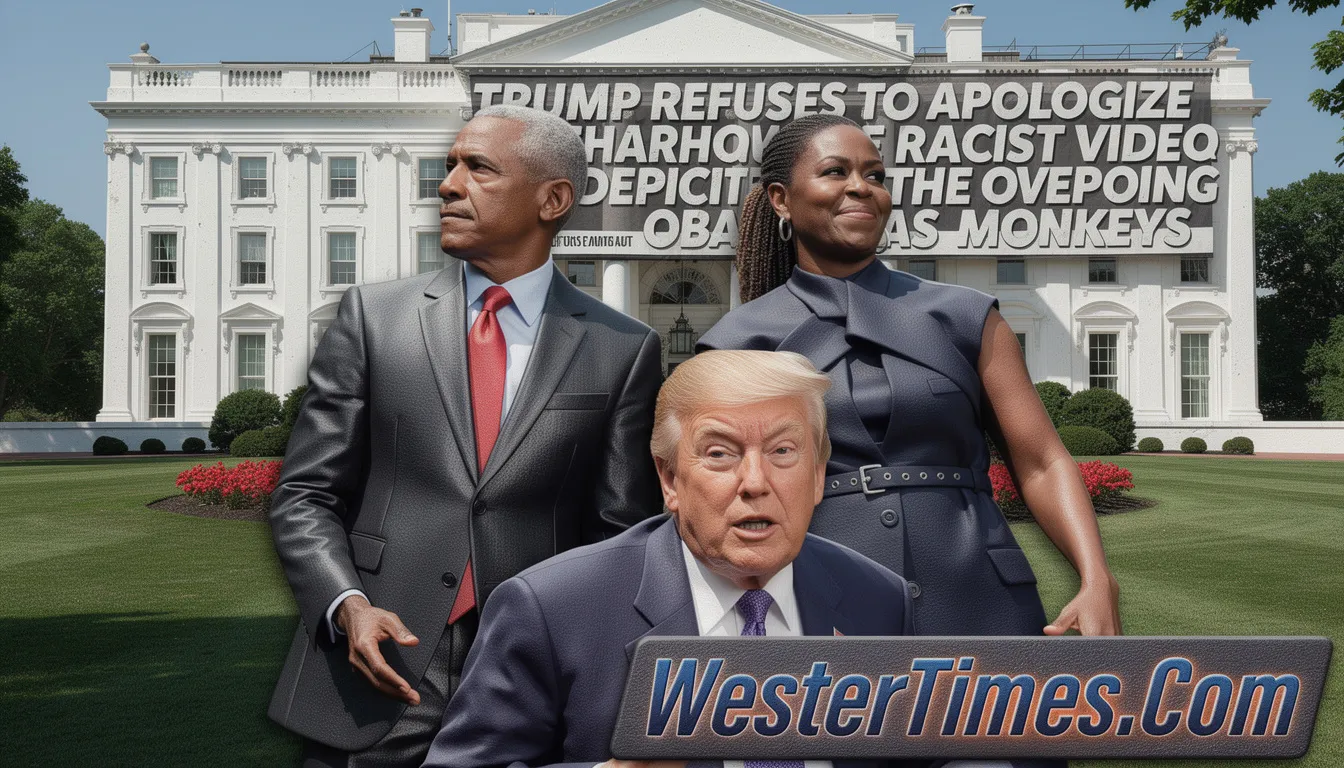
Trump Refuses to Apologize After Sharing Racist Video Depicting the Obamas as Monkeys
Trump racist Obama video, In a political firestorm, President Donald Trump refused to apologize after posting a video on his Truth Social account showing Barack and Michelle Obama as monkeys. Immediately, this action sparked widespread criticism across the political spectrum. Moreover, the incident raised serious questions about political rhetoric, social media responsibility, and the persistence of racist content in public discourse.
Trump racist Obama video Initially, the video focused on false claims about the 2020 election. However, near the end, the Obamas’ faces appeared on primates’ bodies, which many commentators described as deeply offensive and dehumanizing. Furthermore, critics emphasized that such imagery evokes harmful stereotypes that have persisted in American history.
Immediate Backlash and Video Removal
Almost immediately, bipartisan backlash emerged. In addition, civil rights leaders and media organizations condemned the post. Senator Tim Scott, one of the most prominent Black Republicans in the Senate, called the video “the most racist thing I have seen from the White House” and demanded that the president remove it and issue an apology.
Then, the White House deleted the video approximately 12 hours after posting. Officials claimed a staffer posted it by mistake and that the president had not watched the entire clip before it went live. Nevertheless, many observers criticized this explanation, arguing that sharing such content reflects broader problems in political communication and social media management.
Trump’s Response: No Apology
Meanwhile, President Trump clearly stated that he would not apologize. He told reporters that he only watched the beginning of the video and did not realize the offensive content at the end. Moreover, he emphasized that the video aimed to highlight claims of voter fraud, which he continues to promote. Consequently, many analysts argue that his refusal intensified public outrage.
In addition, some supporters defended the post, claiming it was meant as satire or an internet meme. However, critics rejected this reasoning, emphasizing that using animal imagery to depict prominent Black figures draws from a long history of racial caricatures in the United States. Trump social media controversy.
Broader Implications
Beyond immediate controversy, the incident highlights challenges in managing AI-generated or manipulated content online. Furthermore, posting the video during Black History Month made it appear particularly insensitive. Therefore, many civil rights advocates and political observers argue that this incident carries significant political and cultural consequences.
Moreover, the debate continues regarding public officials’ responsibility when sharing content on social media. In addition, experts stress the importance of awareness regarding racial representation in political communication. As a result, this controversy serves as a critical lesson for managing online content in the digital age. Political controversy Trump.