
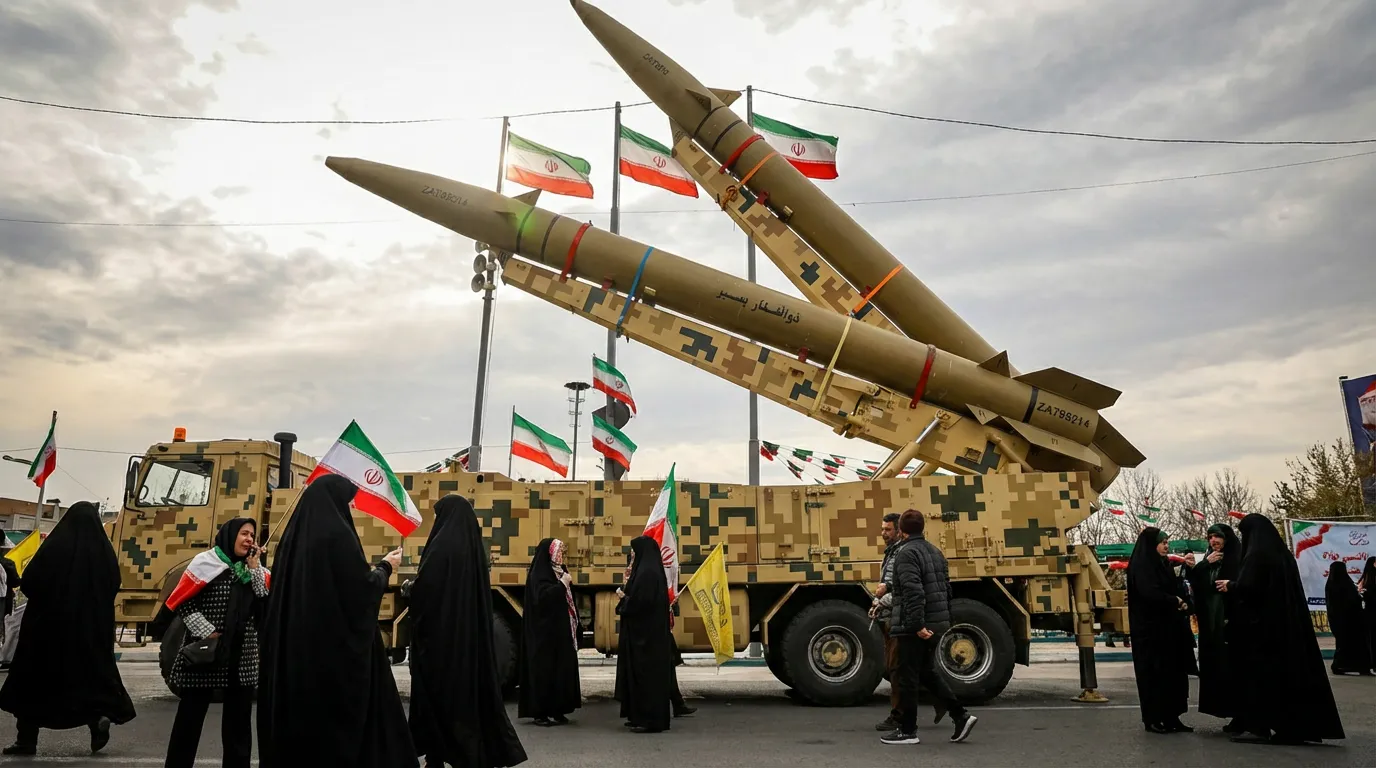
Iran’s Most Feared Missiles: Powerful Weapons That Worry the World
Iran missile program, Over the past few decades, Iran has developed one of the largest missile programs in the Middle East. Through continuous research and military investment, the country has produced a wide range of ballistic and advanced missiles capable of striking targets thousands of kilometers away. As a result, Iran’s missile arsenal has become one of the most feared military forces in the region.
Iran’s missile program grew rapidly due to geopolitical tensions and long-standing international sanctions. Because of these pressures, Iran focused on building a strong missile capability as a deterrent against potential threats. Today, Iran is believed to possess the largest ballistic missile stockpile in the Middle East, with several systems capable of reaching targets up to 2,000 kilometers away.
Sejjil Missile: Iran’s Strategic Solid-Fuel Weapon
One of the most significant missiles in Iran’s arsenal is the Sejjil missile. This medium-range ballistic missile represents a major technological advancement for Iran because it uses solid fuel instead of liquid fuel.
Solid fuel provides several strategic advantages. First, solid fuel allows the military to launch the missile much faster because it eliminates lengthy fueling procedures. Second, solid-fuel systems make storage and transportation easier, which helps conceal the missile from enemy detection and reduces the risk of pre-launch attacks.
The Sejjil missile is believed to have a range of approximately 2,000 kilometers, allowing it to reach targets across much of the Middle East. In addition, the missile uses a two-stage propulsion system, which improves efficiency and increases overall flight performance.
Fattah: Iran’s Hypersonic Missile Technology
Another missile that has attracted global attention is the Fattah hypersonic missile. Iran claims this missile can travel at hypersonic speeds of up to Mach 15, which is about 15 times the speed of sound.
Because of its extreme speed and maneuverability, the Fattah missile is considered extremely difficult to intercept using conventional missile defense systems. Its advanced design allows it to change trajectory during flight, making tracking and interception far more challenging.
With an estimated range of around 1,400 kilometers, this missile could potentially reach key strategic targets within the region in a very short amount of time.
Khorramshahr: A Missile with Massive Destructive Power
Iran also operates the powerful Khorramshahr missile, known for its heavy payload capacity. This missile has a range of about 2,000 kilometers and can carry a warhead weighing up to 1,800 kilograms.
Because of its large payload, the Khorramshahr missile has the potential to cause significant damage to military bases, infrastructure, or strategic targets. Additionally, its mobile launch system allows it to be moved and hidden easily, increasing its survivability during conflict. Iranian ballistic missiles.
Ghadr-110: Precision and Improved Accuracy
Another key missile in Iran’s inventory is the Ghadr-110 missile. This missile is an upgraded version of earlier Shahab missiles and offers improved accuracy and guidance systems.
The Ghadr-110 has a range of approximately 1,800 to 2,000 kilometers, making it capable of reaching targets across the region. Its improved precision makes it a valuable strategic asset for Iran’s military.
Conclusion
In conclusion, Iran’s missile program continues to evolve with increasingly advanced technologies. Missiles such as Sejjil, Fattah, Khorramshahr, and Ghadr-110 demonstrate Iran’s growing capabilities in long-range strike systems.