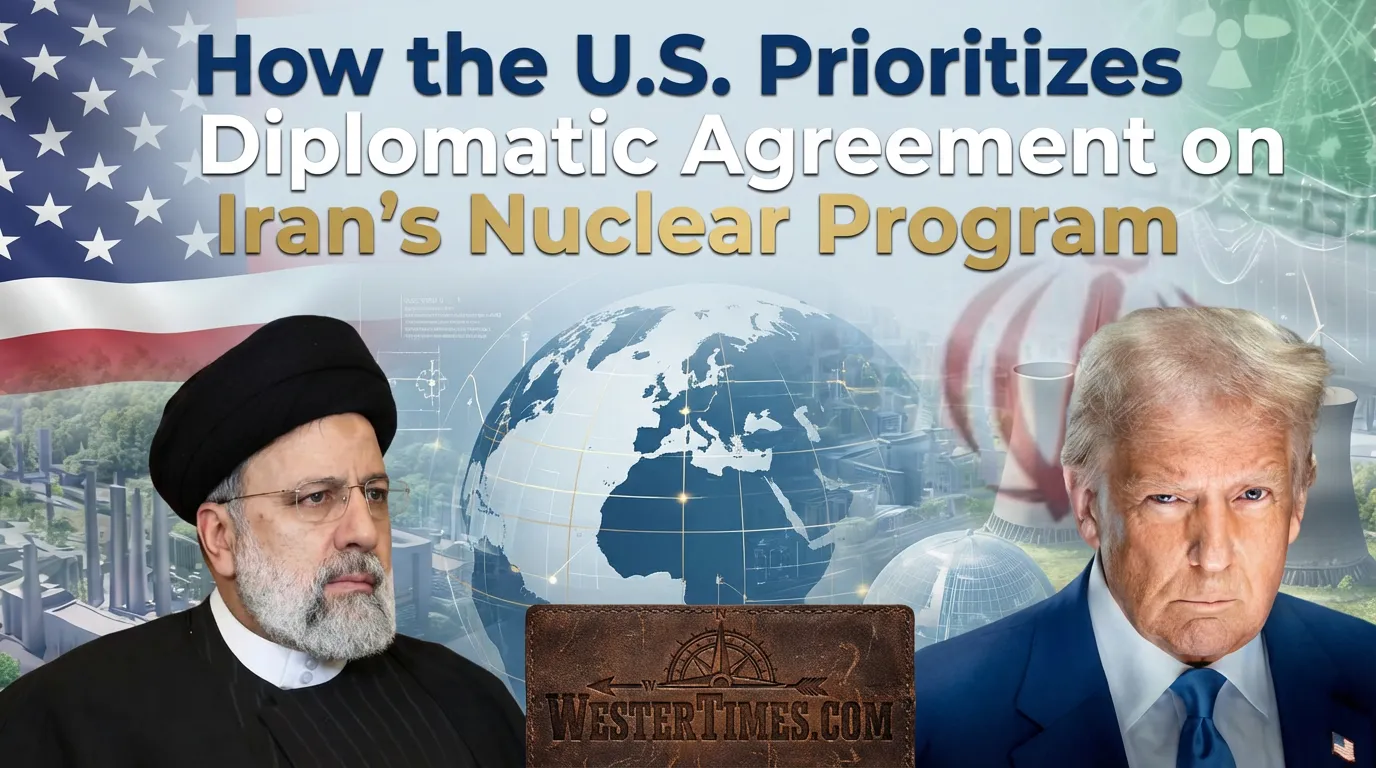
How the U.S. Prioritizes Diplomatic Agreement on Iran’s Nuclear Program
U.S. diplomatic agreement Iran nuclear program, The United States actively emphasizes diplomacy to address the long‑standing tensions with Iran over its nuclear program. Washington clearly prefers a negotiated settlement rather than military confrontation. U.S. officials repeatedly stress that reaching a diplomatic agreement with Tehran remains a central strategy to prevent nuclear proliferation and maintain regional stability in the Middle East.
A Strategic Shift Toward Diplomacy
In recent months, U.S. policymakers have highlighted diplomatic negotiations as their top priority regarding Iran’s nuclear ambitions. Instead of immediately resorting to force, the United States works through dialogue and negotiation channels, including indirect talks with Iranian representatives, often facilitated by third‑party countries. Key U.S. envoys engage in these discussions to explore whether both sides can find common ground on limiting Iran’s nuclear development in a way that satisfies international security concerns.
This diplomatic emphasis serves a dual purpose. First, it seeks to avoid further escalation that could trigger open conflict. Second, it allows the U.S. to build international support for any potential agreement. Allies in Europe and other Middle Eastern partners closely watch Washington’s approach, knowing that a strong diplomatic framework can prevent wider regional tension.
Recent Negotiations in Geneva and Oman
In early 2026, U.S. and Iranian delegations prepared to resume negotiations in Geneva to ease nuclear tensions and explore a potential diplomatic deal.
The talks highlighted both sides’ interest in de-escalation, despite ongoing disputes over critical issues such as uranium enrichment.
U.S. leaders emphasized that any agreement must:
- Restrict Iran’s progress toward weapons capability
- Provide economic relief
- Offer security assurances
Oman served as an important venue for indirect talks, showing that dialogue can continue even after periods of heightened hostility.
Previous negotiation rounds established frameworks for further discussion, reinforcing that diplomacy remains the main channel for resolving nuclear disagreements. Iran nuclear diplomacy.
Challenges and Continued Negotiations
Despite multiple negotiation efforts, obstacles persist. Iran insists on its right to enrich uranium under the Nuclear Non‑Proliferation Treaty while resisting demands to cease all enrichment processes. Iranian officials maintain that enrichment forms part of their peaceful energy objectives. This stance complicates U.S. efforts to secure a deal that fully limits Iran’s nuclear capabilities.
Moreover, Tehran ties its willingness to negotiate to its national interests. Iranian diplomats assert that continuing talks depends on whether outcomes align with Iran’s strategic goals. These differing priorities create a complex negotiation environment where both sides must balance security concerns with political and domestic pressures.
U.S. Commitment to Preventing Nuclear Proliferation
Washington emphasizes reinforcing international non-proliferation norms as part of its diplomatic strategy. By prioritizing a negotiated agreement, the U.S. supports global efforts to uphold treaties like the Nuclear Non‑Proliferation Treaty (NPT).The United States aims to deter the spread of nuclear weapons technology and prevent Iran from acquiring nuclear weapons.
U.S. leaders stress that diplomacy, combined with credible enforcement mechanisms, offers the best path to achieve this security objective. This strategy aligns with global expectations that diplomacy provides the most sustainable solution to nuclear disputes.
Many international actors believe that a political settlement:
- Leads to longer-lasting peace
- Reduces the cost of military escalation
Diplomacy also enables broader cooperation on related issues, including regional security and economic engagement.
Conclusion: Diplomacy at the Forefront
U.S. diplomatic agreement Iran nuclear program In an era marked by geopolitical friction, the United States highlights diplomacy as its foremost tool in addressing Iran’s nuclear program. By prioritizing negotiation over force, U.S. policymakers aim to contain the proliferation risk while upholding global security norms.
Although significant challenges remain, sustained talks in Geneva, Oman, and other venues show that diplomatic engagement continues to guide U.S. strategy. The ultimate test lies in whether these diplomatic efforts translate into a verifiable, lasting agreement that balances Iran’s interests with the world’s demand for a nuclear‑free Middle East.